Vendor Neutrality in Locums: A Strategic Lever for Physician Recruitment Leaders
Healthcare organizations face unprecedented challenges in managing contingent labor costs, vendor
Read MoreAs healthcare organizations navigate the constantly evolving landscape, the need for scalable,
Read MoreThe effectiveness of how you manage your contingent workforce is as important a job as there is in
Read MoreIn the complex world of healthcare staffing, staying ahead requires a deep understanding of the
Read MoreExperts estimate that over 80% of businesses utilize a vendor management system (VMS) in some
Read MoreThe past few years have dramatically changed the way we think about work. Whether it's the rise of
Read MoreToday’s workforce looks vastly different from the one even just three years ago. Between the gig
Read MoreImage: Lahey Hospital & Medical Center When faced with a temporary vacancy the busy Critical
Read MoreNursing and allied health professional wages vary not only among states and cities but also among
Read MoreDuring a work year, organizations lose 6,500 hours dealing with manual processes related to
Read MoreHealthcare Workforce logistics (HWL) has been engaged to manage a Locums Managed Service Program
Read MoreDefinition: Vendor Neutrality... ...is a business and design approach that seeks to ensure broad
Read MoreWhen my colleagues and I formed HWL, there were a lot of spirited discussions around what
Read More
Are you coming to ASHHRA in beautiful PIttsburgh, PA?
Read MoreCLIENT OVERVIEW
Read More

Healthcare organizations face unprecedented challenges in managing contingent labor costs, vendor relationships, and workforce optimization. Strategic vendor management systems deliver measurable cost savings, enhanced transparency, and oversight of contingent staffing programs—positioning procurement professionals to drive meaningful ROI while maintaining operational excellence.

As healthcare organizations navigate the constantly evolving landscape, the need for scalable, efficient, and cost-effective solutions has never been more critical. The challenges of managing a growing workforce, fluctuating patient volumes, and increasing regulatory demands require innovative approaches. This is where Vendor Management Systems (VMS) and Managed Service Providers (MSP) come into play, offering the flexibility and scalability that healthcare organizations need to thrive.

The effectiveness of how you manage your contingent workforce is as important a job as there is in healthcare leadership today. With the rise of the gig economy and the increasing reliance on temporary workforce solutions, businesses are turning to Vendor Management Systems (VMS) and Managed Service Providers (MSP) to streamline their contingent workforce processes. However, amidst the myriad of options available, decision-makers must prioritize three key factors: Consistency, Centralization, and Configurability, often referred to as "The 3 C's".

In the complex world of healthcare staffing, staying ahead requires a deep understanding of the industry. The Staffing Industry Analysts’ (SIA) 2024 Workforce Solutions Buyer Survey, focusing on the United States, sheds light on how organizations manage their flexible workforce, their supplier strategies, and what they prioritize for the future.

Experts estimate that over 80% of businesses utilize a vendor management system (VMS) in some capacity, while only 71% of healthcare facilities use it. However, given the fact that around 90% of healthcare facilities utilize contingent labor, which has seen vast increases in reliance over the last few years, it may come as a surprise that more systems don't take advantage of a VMS.

The past few years have dramatically changed the way we think about work. Whether it's the rise of the gig economy or the ubiquity of remote work, nearly every industry has been impacted by the ever-evolving labor landscape; and the healthcare industry is no exception.

Today’s workforce looks vastly different from the one even just three years ago. Between the gig economy, remote work's increasing viability, and technology now facilitating contactless appointments, no longer are all workers working 9 to 5.

Image: Lahey Hospital & Medical Center
When faced with a temporary vacancy the busy Critical Care unit at Lahey Hospital and Medical Center, does what every other healthcare facility would do, contacts a rapid response staffing agency to fill the vacancy quickly. Desperate for a qualified candidate, the Critical Care Nurse Manager complies with the terms of the agency’s contract and agrees to the agency rate requested for the expedited candidate.

Nursing and allied health professional wages vary not only among states and cities but also among clinical specialties, certifications, roles, and practice environments. Coupled with the laborious task of managing multiple contract labor agencies, it can be a frustrating recruitment process. The crux of the matter is how do you acquire top temporary talent seamlessly and without overpaying? And how do you uncover if your organization is overpaying in the first place?

During a work year, organizations lose 6,500 hours dealing with manual processes related to managing staffing suppliers.

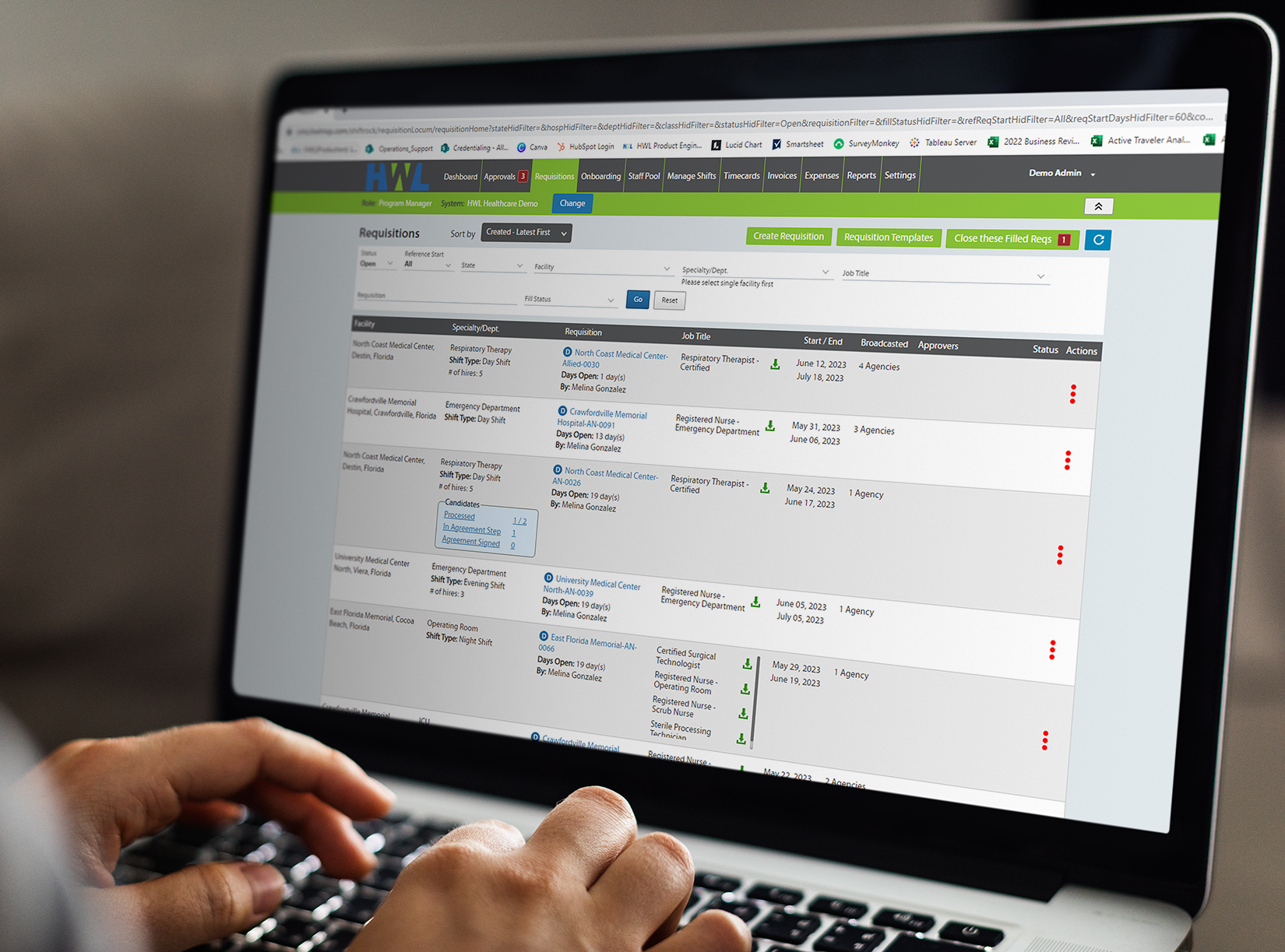
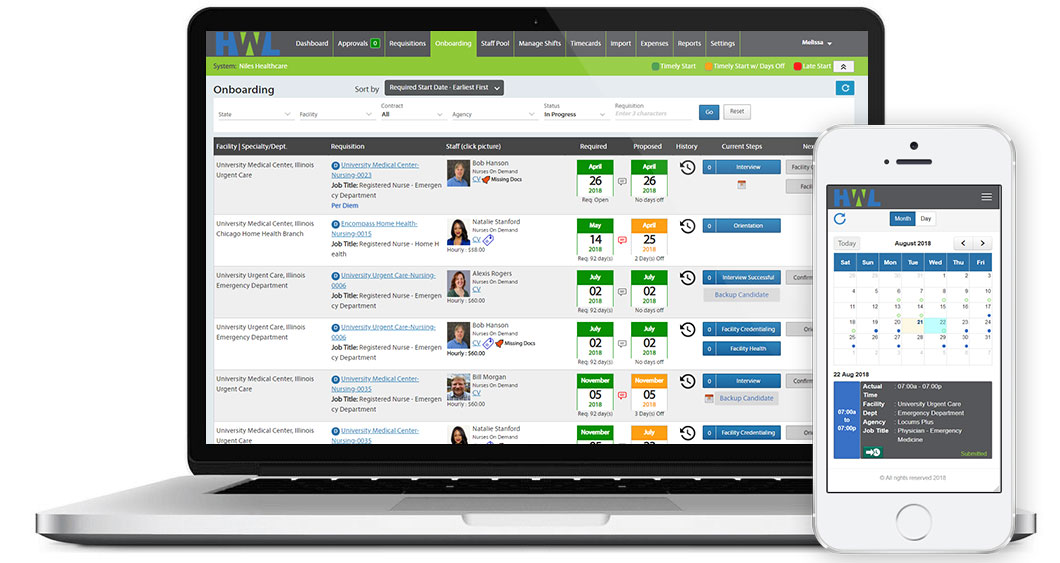
Healthcare Workforce logistics (HWL) has been engaged to manage a Locums Managed Service Program (MSP) for Healthcare Council of the National Capital Area (HCNCA) and National Capital Area Shared Services (NCASS) including HWL proprietary Locums VMS.

Healthcare Workforce logistics (HWL) has been engaged to manage a Locums Managed Service Program (MSP) for Maine Hospital Solutions (MHS) including HWL proprietary Locums VMS.

Healthcare Workforce logistics (HWL) has been engaged to manage a Locums Managed Service Program (MSP) for the Colorado Hospital Association (CHA) including HWL proprietary Locums VMS.

Healthcare Workforce logistics (HWL) has been engaged to manage a Locums Managed Service Program (MSP) for the Arizona Healthcare and Hospital Association (AzHHA) including HWL proprietary Locums VMS.

...is a business and design approach that seeks to ensure broad compatibility and interchangeability of vendors and technologies. The model encompasses standardization, non-proprietary design principles, and unbiased business practices.

When my colleagues and I formed HWL, there were a lot of spirited discussions around what constitutes a great VMS/MSP program. And yes, there were lots of different perspectives and opinions regarding the existing models in the marketplace, and about the functionality gaps that existed in available VMS systems. However, there was one area where there was universal agreement. Treat agencies with respect, listen, and be hyper-focused on what is important to them. This may sound simple and obvious but having been in this business for over 20 years I constantly hear from agencies that are frustrated with this or that MSP provider or VMS system because they feel like concerns aren’t heard and they are treated as second class citizens. Having spent the first part of my career on the agency side, I personally experienced this and remember that feeling. Not great.

Are you coming to ASHHRA in beautiful PIttsburgh, PA?