The Hidden Leadership Tax of Locums Management
Most healthcare organizations understand the financial cost of locums. What’s harder to quantify but just as real is the leadership tax that comes with managing them.
Most healthcare organizations understand the financial cost of locums. What’s harder to quantify
Read MoreThe cornerstone of exceptional patient care in modern healthcare systems lies in the effective
Read MoreThe demand and costs for locum tenens providers is continually on the rise. With the increasing

Read MoreOver the last several months, much has been discussed about the state of staffing, how certain

Read MoreLocum tenens, also short-handedly referred to as locums, are physicians that temporarily fill

Read MoreFor better or worse, the world of locum tenens staffing is changing more rapidly than ever before.

Read MoreUtilizing multiple locum agencies with individual contacts for each specialty can easily become

Read MoreThe Situation Banner Health, regarded and recognized as a top health system in the country for the

Read MoreThe world of locum tenens is changing at a pace that most, if not all of us, probably have not seen

Read MoreAmerica's healthcare system has its foot stuck on a train track and the evening express is hurtling

Read MoreCLIENT OVERVIEW
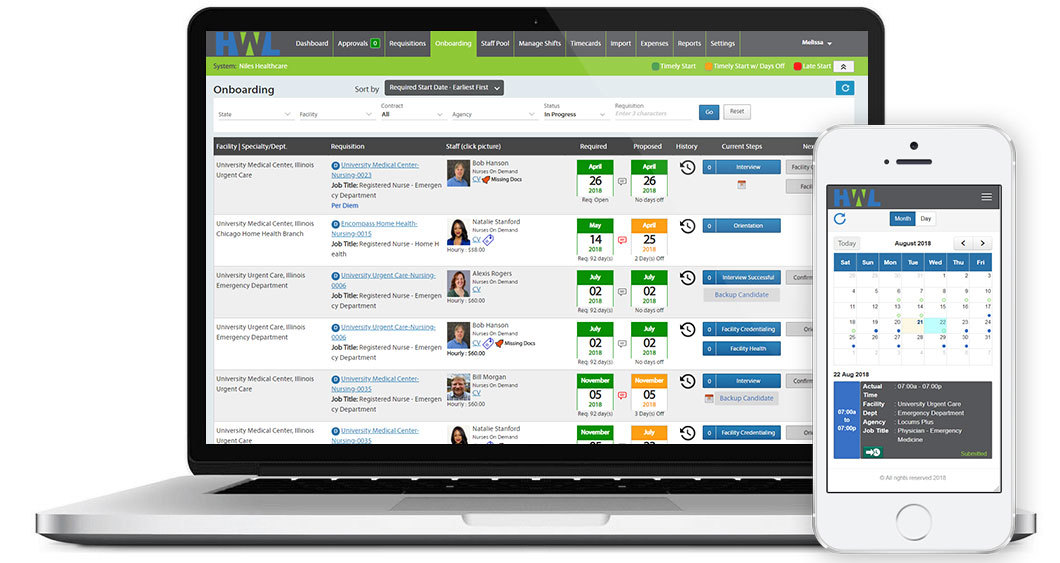
Read MoreTHE DAYS OF SMARTER LOCUM AGENCY MANAGEMENT HAVE ARRIVED Managing multiple Locums agencies can be a
Read More
Most healthcare organizations understand the financial cost of locums. What’s harder to quantify but just as real is the leadership tax that comes with managing them.

The cornerstone of exceptional patient care in modern healthcare systems lies in the effective management of a skilled and adaptable workforce. For large health systems, this challenge is magnified when it comes to coordinating temporary physician coverage, known as locum tenens. The University of Vermont Health Network Medical Group (UVMHN) recently faced this challenge head-on, embarking on a transformative journey to revolutionize its locum tenens management. It is the story of how a fragmented system evolved into a streamlined, unified program that not only improved operations but also enhanced patient care.

The demand and costs for locum tenens providers is continually on the rise. With the increasing demand for healthcare and diminishing supply of providers across the healthcare community, the need for flexible staffing solutions has organizations across the US turning to Vendor Management Systems (VMS) and Managed Service Providers (MSP) to streamline their operations and ensure quality coverage. Once only for the travelling nurse community, a well-chosen VMS/MSP can efficiently manage locums staffing needs, reducing the stress and cost of using locums.

Over the last several months, much has been discussed about the state of staffing, how certain segments are contracting significantly, and the overall shifting landscape. The one major area of expansion though is the physician and provider space. From the latest by SIA, we are seeing continued locum tenens growth with 27% in 2022, 12% in 2023, and a projected incremental growth in 2024 of an additional 7%.

Locum tenens, also short-handedly referred to as locums, are physicians that temporarily fill staffing gaps whenever necessary. Conceived in the 1970s, locums originally filled staffing gaps in rural communities that didn't have great access to healthcare; but today, locums have become a mainstay in the healthcare space, utilized by all.

For better or worse, the world of locum tenens staffing is changing more rapidly than ever before.

Utilizing multiple locum agencies with individual contacts for each specialty can easily become overwhelming and impossible to manage. Due in part to a lack of advancement and modernization in locum tenens staffing over the last decade, many organizations are now seeking new ways to streamline the process.

The Situation
Banner Health, regarded and recognized as a top health system in the country for the clinical quality consistently provided to patients in its hospitals, is headquartered in Phoenix, Arizona. The non-profit health system operates 30 hospitals, including three academic medical centers and other related health entities and services in six states. With over 52,000 employees and 5,000 providers, Banner Health is Arizona's largest private health system and the third largest employer in the Northern Colorado front-range area.

The world of locum tenens is changing at a pace that most, if not all of us, probably have not seen in our careers. We are seeing many statements or surveys that show that upwards of 40-50%+ of all physicians and providers are doing or open to locums/moonlighting work, 30-40%+ are moving to a locums lifestyle for a work life balance or to supplement their income, and that certain specialties are seeing spikes in utilization so are creating crisis level coverage issues driving department/unit closures or diversion of services.

America's healthcare system has its foot stuck on a train track and the evening express is hurtling down the track.

Managing multiple Locums agencies can be a time consuming and frustrating process. And with email and phone-based communication, tracking your progress, managing costs against budget, and gaining visibility into quality and performance metrics is nearly impossible. That is why many health systems reduce the number of agencies they work with. There just isn't enough time in the day. The result? Fewer providers hear about you, less competition for your business, higher rates and fees, less overall choice.